Freelancers: Stop Making These 3 Critical Marketing Errors
Most freelancers tank their marketing with the same three mistakes—gut-feel decisions, client condescension, and creativity without strategy.

Why Marketers Get Called Idiots (And How to Fix It)
"Marketing screwed up" is the universal excuse for any failure. Client didn't buy? Blame marketing. Product flopped? Marketing dropped the ball.
And everyone buys it.
Let's break down where this reputation comes from—and how to escape it.
The Low Barrier Problem
To call yourself a marketer, you need clear thinking and decent communication skills. Sometimes just the second one.
In 2026, the bar dropped even lower. AI tools let anyone generate a "marketing strategy" in 15 minutes. Result: more random people calling themselves marketers. They make stupid mistakes.
Mistakes stick. Wins don't.
Three mistakes show up more than any others.
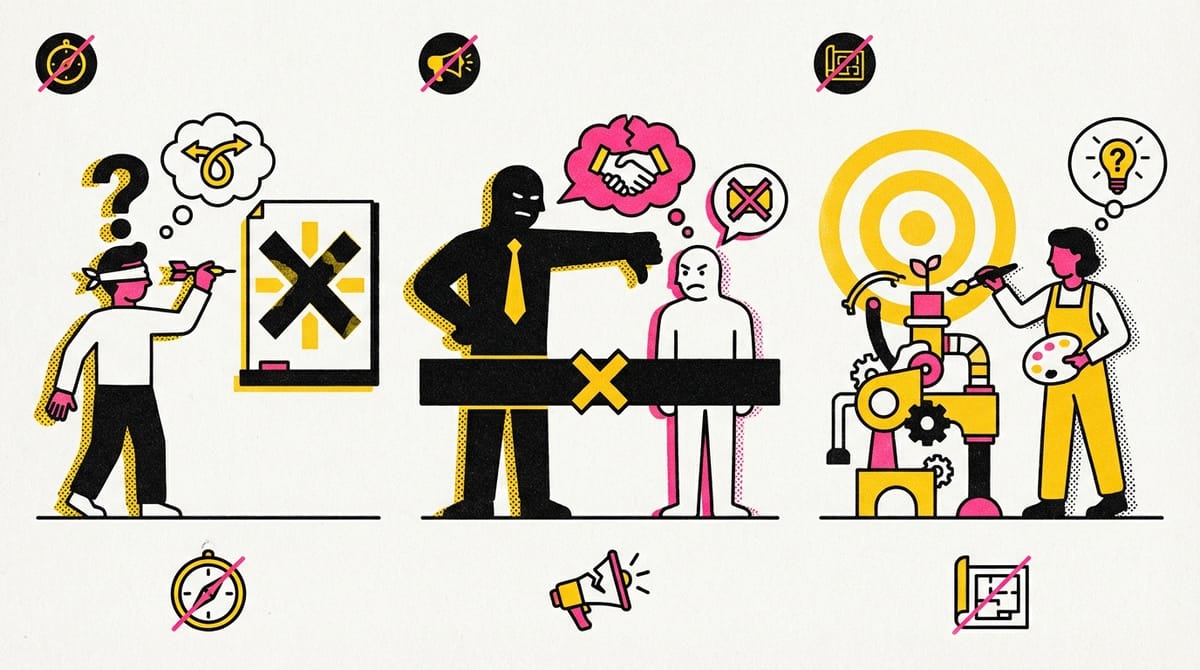
Mistake #1: Gut Feel Instead of Research
Say you're a freelancer. You need to pick a niche and figure out what services to offer.
How bad marketers do it:
They fantasize. They dress up their opinions as "audience insights." "Startups need landing pages"—and off they go.
How to do it right:
Use a 3-point filter:
- Demand — Are there clients with money for this service?
- Skill — Can I do this better than average?
- Interest — Will I burn out in six months?
| Approach | Result |
| Focused freelancers | $150/hour |
| "Everything for everyone" crowd | $50/hour |
Any budget goes nowhere if the hypothesis is wrong. And a hypothesis based on fantasy is wrong 90% of the time.
What to do: Talk to 5 potential clients. Don't sell—listen. What hurts? What do they pay for?
Data kills fantasy.
Mistake #2: Treating Clients Like They're Stupid
You come up with a brilliant tagline. You bring it to the client. They ask questions. It annoys you—they don't understand your genius.
Stop.
The client is putting $50,000 into advertising—possibly more than your annual revenue. They have every right to understand what they're paying for.
Imagine: you're buying a $3,000 laptop. You want to know if it's worth the money. The salesperson rolls their eyes and says "just trust me."
You buying?
Your job is to explain why the solution works. Not "trust me"—but "here's the data, here's the logic, here's the expected result."
Buzzwords like "omnichannel" and "synergy" don't impress clients. Concrete numbers and clear logic do.
What to do: Every recommendation you make should answer one question: "why this?"
One recommendation. One reason.
Mistake #3: Creativity Over Strategy
Inexperienced marketers think a cool idea will solve everything. Shoot a viral video—boom, success.
It won't.
Marketing is more logic than art. You need to:
- Break the problem into stages
- Match channels to specific steps
- Measure results at each stage
If your goal is creative self-expression, that's a different profession. In marketing, there's always a client with business objectives and a budget.
You don't get to self-actualize on someone else's dime.
What to do: Before any "creative idea," answer three questions: Which metric will this move? How will we measure it? When will we see results?
The Difference Between Bad and Good Marketers
| Type | What They Do |
| Bad marketer | Turns their fantasies into ads using someone else's money |
| Good marketer | Studies the problem, writes a plan, tracks execution. Sees it through. Solves business problems using marketing tools. |
For Freelancers and Consultants
When you're your own marketer, these three mistakes show up differently.
Gut feel in choosing a niche
You pick a niche based on feelings, not data. "I like working with startups" isn't a strategy.
It's a fantasy.
What to do:
Look at your last 10 clients:
- Who paid the most?
- Who was easiest to work with?
- Where was the result most obvious?
That's your niche—not the one you like, the one that works.
Failing to explain your value
Client asks "why $2,000 for a landing page?"—and you freeze. You start justifying. Listing hours worked.
What to do: Sell the outcome, not the process. Not "20 hours of work"—but "a landing page that converts 5% of traffic into leads."
Price ties to value for the client, not your costs.
Creative social posts instead of a system
You post pretty pictures on Instagram and wait for clients.
Clients don't come.
What to do:
Replace "post and hope" with a system:
- Three LinkedIn posts a week breaking down case studies and client mistakes
- Zero ad budget—this generates 3-5 discovery calls a month
Not creativity for creativity's sake. Content for leads.
What Doesn't Work in 2026
These approaches used to be standard. Now they kill results.
| What Doesn't Work | What to Do Instead |
| ❌ Confusing content volume with quality AI lets you pump out tons of content. Clients and algorithms learned to tell generic from valuable. | ✅ Less content, more specifics One useful post beats five empty ones. |
| ❌ Generic messaging for everyone One-size-fits-all is dead. Clients expect you to talk about their problems, not abstract "business challenges." | ✅ Segment your audience Startups get one message, agencies get another. |
| ❌ Buzzwords and complicated language "Omnichannel integration for maximizing touchpoints" isn't expertise. It's a smoke screen. | ✅ Speak plainly "Customers see you everywhere and buy more often"—that's clear. Clear = trust. |
| ❌ Copying competitor strategy "Competitor's TikTok is working—so we need one too." That's not strategy. That's panic. | ✅ Strategy comes from your data Base decisions on your data about your clients. Not from what others do. |
How to Not Be an Idiot
Marketers get called idiots because the barrier to entry is low and mistakes are visible to everyone.
Three Ways to Beat the Odds
- Decisions based on data, not fantasy
- Explain the logic, don't demand faith
- Strategy first, creativity second
What separates a professional from an amateur isn't talent.
It's a systematic approach.