How to Market a Boring Product: A Story About GDPR Compliance Software
A legally mandated tool nobody wants to buy. Millions of potential customers driven purely by fear of fines. Here's how we marketed it.

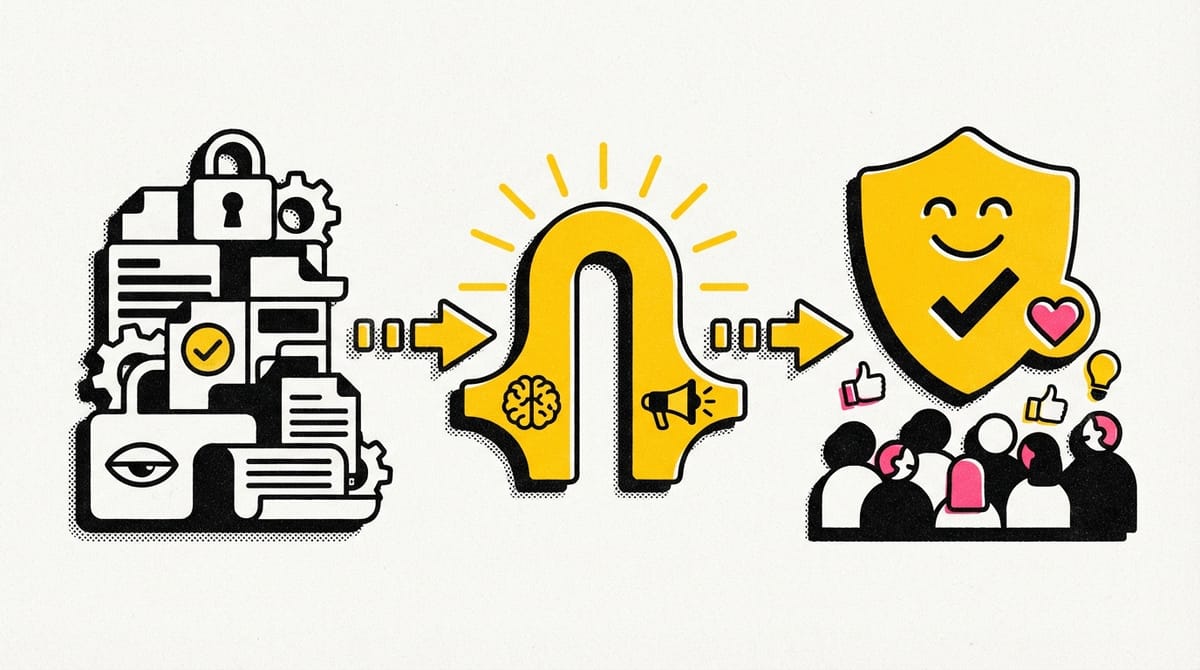
Imagine this: you're a marketer, and you need to sell data privacy compliance software. Not iPhones, not Nike sneakers, but a legally mandated tool that nobody actually wants to buy. How would you approach this?
I worked at a company that built these solutions. And today I'll share how we built marketing around a product that people buy not out of desire, but out of fear of penalties.
Why GDPR Compliance Software Became a Thing
Before 2018, website owners had it relatively easy. They collected user data, dropped cookies, and sent marketing emails without much friction. Then the European Union enforced the General Data Protection Regulation.
The concept is straightforward: now every company handling EU residents' data must obtain explicit consent, document data processing activities, and respond to user requests within strict timeframes. Fail to comply — face fines up to €20 million or 4% of global annual revenue, whichever is higher.
Within a few years, millions of businesses worldwide needed compliance tools. A massive market emerged. But how do you sell a product that nobody wants to buy?
The Customer's Main Problem Isn't What You Think
When marketers think about customer problems, they often overcomplicate things. They dream up dashboards with consent analytics. Add user behavior tracking. Build in marketing automation integrations.
But the business owner's real problem is simpler: they don't want to get fined.
That's it. Period. This is the central pain point around which the entire product is built.
What does it take to avoid a fine? Three things:
- Display a proper cookie consent banner (not just a notification — actual consent collection)
- Maintain records of consent that can be produced during an audit
- Enable users to withdraw consent and request data deletion
What the Ideal Compliance Tool Looks Like
We spent considerable time researching small and mid-sized business needs. We surveyed owners of e-commerce stores, SaaS products, and marketing agencies. Here's what we discovered.
The ideal compliance tool is an invisible tool. Install it, configure it once, and forget about it. It simply works and demands no attention.
What this requires technically:
- One-line JavaScript installation (no developer needed)
- Auto-detection of cookies and trackers on the site
- Compatibility with popular platforms: WordPress, Shopify, Webflow, HubSpot
- Automatic updates when regulations change
No bells and whistles. No unnecessary functionality. Just a reliable solution that does its job.
Two Audiences — Two Strategies
Here's where it gets interesting. Compliance software often isn't sold by vendors directly to end users, but through digital agencies, web developers, and marketing consultants. These intermediaries already have trusted relationships with businesses.
This creates a B2B2C model. First, convince the agencies and consultants to recommend our tool. Then help them convince their clients.
For agencies and consultants, what matters:
- Recurring revenue share (15-25% of subscription)
- White-label options to maintain their brand
- Technical documentation for smooth implementation
- Priority support for client issues
For end customers, what matters:
- Affordable pricing (our main segment is SMBs)
- Easy setup without coding
- "Set and forget" reliability
- Clear proof of compliance for audits
Two different audiences — two different communication approaches.
How We Built Our Communications
First task — explain when compliance is required. This confused many businesses: Does GDPR apply if I'm based in the US but have European visitors? What about a small blog with no sales? We created a simple assessment quiz on the website. Answer five questions — get a clear answer with explanation.
Second task — articulate the advantages of our tool. Here we focused on three things:
- Lowest price for full compliance (starting at $9/month)
- Works with any website platform
- Live in 10 minutes, no developer required
No complex technical specifications. No talk about server architecture and data encryption protocols. Only what matters to the business owner.
Which Channels Worked and Which Didn't
What worked great:
- Search ads targeting "GDPR compliance tool" and "cookie consent solution" queries
- LinkedIn targeting aimed at marketing managers and agency owners
- Email campaigns to web developer and agency databases
- Webinars about regulatory updates and enforcement cases
What didn't work:
- Display advertising (too broad, low intent)
- Influencer marketing (wrong audience entirely)
- TikTok and Instagram (our buyers aren't scrolling for compliance solutions)
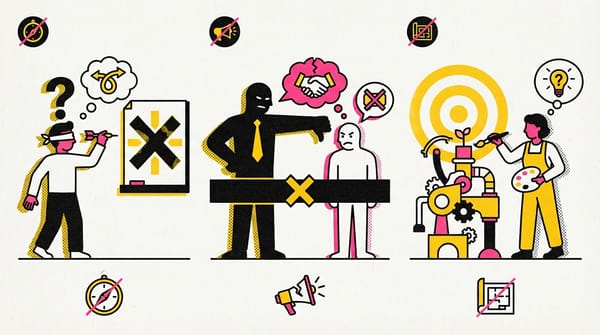
It would have been a mistake to hire a celebrity or popular creator for compliance software ads. This is a niche B2B product. A viral campaign wouldn't help here, no matter how creative the approach.
Product Economics Dictate Marketing
Compliance software operates on a subscription model, but with high churn risk. Average contract value — $150-400/year. Margin after infrastructure and support costs — 60-70%, but customer acquisition cost must stay below $100 to maintain unit economics.
Most customers sign up for the minimum plan and rarely upgrade. Many cancel after a year if they haven't faced any compliance issues — the classic "insurance product" problem.
How do you increase LTV? We tried several approaches:
- Annual plans with discount (improves cash flow, reduces churn)
- Add-on modules for different regulations (CCPA, LGPD, ePrivacy)
- Agency partner program with managed billing
But the main profit still came from volume at the entry tier. So the focus remained on efficient acquisition and reducing time-to-value.
Key Lessons
First lesson: don't overcomplicate simple products. If the customer is buying to avoid a fine, don't try to sell them a revolution in data management.
Second lesson: in a B2B2C model, think about both sides' motivations. Agencies won't recommend a product that doesn't make them look good or earn them revenue.
Third lesson: product economics determine marketing strategy. You can't use expensive brand-building channels for low-ticket products with price-sensitive buyers.
Fourth lesson: choose tools based on the task, not because they're trendy. We didn't launch on TikTok, even though everyone was talking about it. Our customers aren't there.
Marketing boring products is a challenge. But it's precisely with these products that a marketer's true skill is tested. When there's no wow factor, all that's left is a clear understanding of customer needs and smart channel management.
Have you ever had to sell products that nobody wants to buy? How did you tackle that challenge?