Reinventing Your Path After Rejection: A Game-Changing Strategy
A rejection for lack of experience isn't a closed door — it's a delayed invitation. Here's how one marketer proved it by landing a tech offer six months after being turned away.

How to Come Back After a Rejection and Land the Offer
Imagine this: you interview for a product marketing role. Your background? Brand management at an FMCG company — dairy products, the kind you see in every grocery store.
Soft skills? Excellent. You know how to negotiate. You read people well. But product marketing experience? Zero.
Rejected.
But what if you came back six months later — and landed an offer at a major tech company? That’s exactly what happened to one marketer who used this playbook.
What he did in those six months
Reverse-engineer the skills through free resources. Skip paid courses. Instead, analyze what experts actually teach. The Product Marketing Experts podcast (100+ episodes with PMMs from Canva, Braze, LinkedIn). Intercom’s blog with deep dives on product storytelling. Newsletters from practitioners — Rory Woodbridge, Emily Kramer.
The method is simple. Look at program structures. Write down the key skills. Fill the gaps.
Rebuild your information diet. Out with your old industry content. In with content from your target field. Blogs, podcasts, public materials. See an unfamiliar term? Go read about it.
Read "On Writing Well" by Zinsser. Foundational skill for any marketer — write clearly.
Reframe your experience. Not resume cosmetics. A complete rewrite through the lens of your target role.
The result? That marketer came back for the second interview, answered every question. Delivered a strong take-home assignment. Now runs CRM marketing at a major tech company.
Action: Find 3-5 free resources in your target niche. Subscribe. Read 20 minutes a day. In a month, you'll speak the industry's language.
If you got rejected
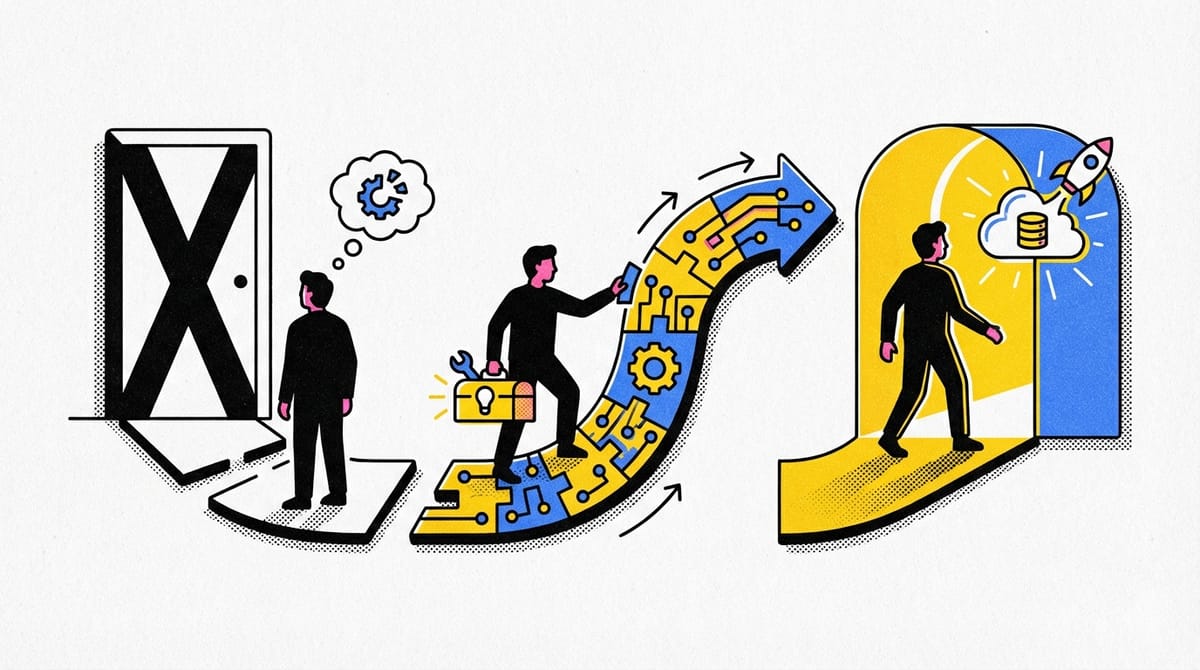
A rejection for lack of experience isn't a closed door. It's a delayed invitation.
Got feedback? Great. Work with it. No feedback? Recall where you stumbled. Then work on that.
One consultant got 11 rejections in a row. An unexplained career gap. Burnout — but she stayed silent about it. After reframing her resume: "Career Break: Aug 2024 – Mar 2025. Focus on recovery + Google UX certification (Coursera). Returned with focus on sustainable product design."
Interview conversion went from 0% to 44%.
Silence about gaps raises suspicion. Explanation + context removes questions.
And don't be afraid to apply to the same company again. Different department, different role — different outcome. Recruiters don't always route candidates to the right openings. Their miss, not yours.
Action: After a rejection, write down 3 moments where you felt unsure. That's your plan for the next 3 months.
For freelancers and consultants
Client rejection — same principle, different tactics.
Rejection ≠ end of relationship. The client said "no" to a specific project at a specific moment. Not to you as a professional. In 3-6 months, things change: budget freed up, the previous contractor dropped the ball, the task became urgent.
Follow up in 3-6 months. Not "Did you change your mind?" — value. Share a relevant case study. Send an article on their topic. Congratulate them on company news.
Remind them you exist. No pressure.
Add them to your nurture list. Clients who said no aren't trash — they're a warm list. They know who you are and what you do. Keep them in your orbit: newsletter, LinkedIn, occasional touchpoint.
Show progress. Rejected because you lacked experience in their niche? Six months later, show new case studies. A portfolio update email works better than "I'm still available."
Over 50% of freelance projects are won after the fifth follow-up. Client silence isn't rejection.
It's a pause.
Action: Create a "Rejections" spreadsheet. Date, client, reason (if known), follow-up date. Set a reminder for 3 months out.
What doesn't work
One resume for every application. Recruiters and clients spot a generic approach instantly. Top reason for rejections. Tailor to the specific role — even if it takes more time.
Silence about gaps. Unexplained breaks lead to automatic rejections. Name the gap explicitly + add context: what you learned, what skills you gained.
Treating silence as rejection. Client didn't respond? They're busy. Or the email got buried. Or the decision got delayed. Follow up 2-3 times with short, value-driven messages.
Reacting to urgency. "Immediate hiring," "Join within 24 hours" — pressure = manipulation. In 2025, this is a marker of sketchy offers. Your attention has value. Analyze, verify, don't rush.
Arguing with feedback. Even if the feedback is unfair — arguing won't change the decision. Say thanks, draw conclusions, move on.
Check: Before your next application — is this generic or tailored? If you could send the same thing to another client without changes, you haven't adapted enough.
Tools
| Coursera | Professional certificates for career pivots (Google, IBM, Meta) | Free audit / $49/mo for certs |
| LinkedIn Learning | Skill-building courses in any field — marketing, tech, design | Free trial / $29.99/mo |
| Teal | AI-powered resume tailoring, job tracking, skills matching | Free (basic) / $9/week |
| Notion | Track rejections, plan follow-ups, build a personal CRM | Free (personal) |
Rejection is data
Every rejection contains information. Sometimes they give it to you directly. Sometimes you have to extract it yourself: where you stumbled, what you couldn't explain, which question caught you off guard.
Collect that data. Fill the gaps. Come back.
Six months is enough to become a different candidate.
You can prove it too.