The Critical Difference Between Personal Blogs and Media Projects

Chapter 1: Draw the Line — Personal vs. Commercial
Here's a formula. Simple, battle-tested, the kind that makes you smack your forehead and mutter "obviously." Apply it, and things click into place. I promise.
Ready? Don't mix your personal blog with a media project. They're different beasts. Completely different.
Wait.
You know that moment in old movies? The story builds momentum, tension rising — then the film snaps. Screen goes white. Some guy appears and starts rambling nonsense. Or just slaps you with silence.
That moment needs to happen in your head too. Otherwise — you're fucked.
Because right now, everything's starting to blur together up there.
Personal blog, professional blog — what's the difference? Which one should I run? Both? When will I find time? How many engagement posts, how many sales posts? What should I talk about? What's the value proposition?
None of this is bullshit, by the way.
These are real tools, proven over years:
- content calendar planned a month ahead
- the 40/30/20/10 ratio — expert, engagement, sales, personal
- editorial calendar with deadlines
- fourteen-page tone of voice guide
- target audience analysis by pain points and desires
- warming funnel
- KPIs for reach and engagement
Marketing pros and media managers know their craft — these rules work. For media projects.
But today, let's break some rules.
Today we're talking personal blogs. People who write because they can't not write — not because "Friday, expert post" is penciled into their calendar.
A personal blog is you. Messy, contradictory, unpredictable.
Today something pisses you off. Tomorrow — something completely different. Life throws you around — and you keep writing anyway.
That was me in 2022.
Russia invaded Ukraine. I shut down my Russian-language blog — couldn't keep going like before. Immigration. Life throwing me around. What do I write about? How do I find work?
Hypotheses:
- show what I know — find clients
- or show what I can do — find an employer
- or just write about whatever's eating at me
Testing everything at once. Lurching this way, then that way, then back again.
Slowly you find your footing. Calm down. Get back on track.
But sometimes the switch still flips in an unexpected direction. The blog went through a dozen rebirths — just like me.
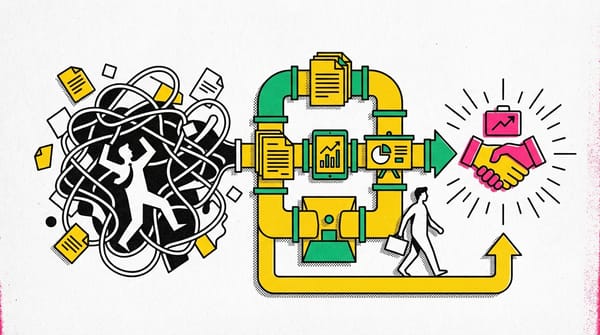
A media project is when you open analytics before you open your text editor.
Who read yesterday? Where'd they come from — search, recommendations, newsletter? Which post converted to subscribers?
You haven't written a single word yet — but you already know what to write. Because the data told you.
A project has goals, metrics, deadlines.
There's a customer avatar — woman, 28–35, major city, above-average income, struggling with self-esteem.
There's a content plan three weeks out: expert piece here, engagement piece there, sales post here, and here — a personal story (but still feeding the funnel).
There's A/B testing on headlines.
There's UTM tags on every link.
There's knowing exactly when your audience is online — Tuesday, 7:47 PM, give or take twelve minutes.
And you know what? It works. Seriously.
It's an entire industry with proven methods, real budgets, and actual results.
A media project can be about you — but it's not you. It's a business with your face on the cover.
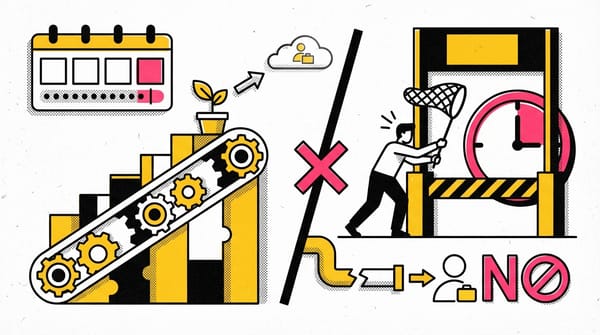
When you mix personal with project — destruction begins. Quiet, invisible, but irreversible.
Here's what happens.
You want to write something. Something that genuinely burns inside you — maybe politics, maybe a friend's divorce, maybe how you screwed up last week.
Fingers already hovering over the keyboard.
Then the voice kicks in:
"Would my audience care? Does this fit my positioning? Will people unsubscribe? What will my collab partner think — we're launching something next week?"
You deflate. Close the laptop. Don't write.
Because without realizing it, you made your core — your actual self — subordinate to some collective reader's will.
And that collective reader? An avatar from a marketing spreadsheet. You barely understand them. They change every quarter — along with trends and algorithms. You're chasing a ghost.
This destroys you. Your mind. Your motivation. That raw nerve that makes writing come alive.
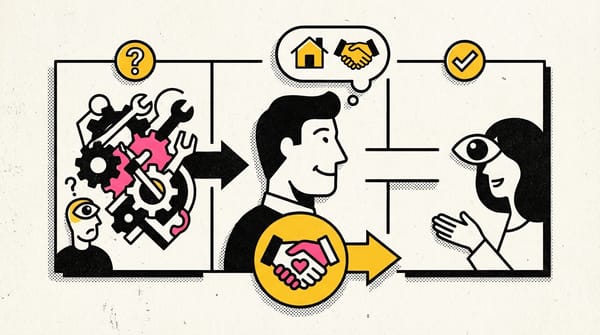
The fix: draw the line.
You can have as many channels as you want. Each with its own job.
You don't need to cram your entire life into one window.
You can build a business card — case studies, portfolio, "here's what I do, here's how to work with me."
Followers don't matter. People find you through word of mouth or search, look around, hire you.
Takes a week to build. Works for years. No content calendar — just a storefront.
You can run a professional channel — for peers, for the industry. Breakdowns, opinions, community.
Here you're an expert with a stance. It's a project — but you know what you signed up for. Eyes open.
You can go the explainer route — "introducing people to a topic."
Here it's about a value system, not personal stuff. You're a bridge between knowledge and audience. You as a person might not even be there.
Or — a personal blog. For your tribe. For people who find you interesting exactly as you are.
No positioning filters, no avatars, no funnels. Just you — with all your chaos.
One well-known business blogger runs a channel about investing and politics.
Clear value prop: "the right way to live."
No lifestyle content, no photos from parties — even though parties, hookah lounges, and travel are a huge part of his actual life.
Because hookah doesn't serve the channel's goal. That's a conscious choice.
It's not hypocrisy. It's separation: here's the project, here's me. Project is a product. I'm a person.
And one doesn't interfere with the other — as long as you don't confuse which is which.
Channels can be experiments.
Launched one — didn't take off — okay, abandoned. Launched another — flew. Let it simmer.
The key is not expecting the world to line up the moment you present yourself.
That doesn't happen. And it shouldn't.
I had a project like that. The formula worked — until it didn't.
Chapter 2: Case Study — Keeping Only the Joy
I had a project — NotNowSchool. An Instagram about soft skills.
Carousels, reels, stories. But not that soul-crushing business content — "five steps to successful success."
Everything was built on neurocognitive science — how the brain actually learns, makes decisions, forms habits.
The tone was simple: you've got this, take care of yourself.
It was play. Pure energy.
I invented formats, tested ideas, thrived on the freedom.
No constraints — today a carousel about procrastination, tomorrow a reel about how attention works. Day after — breaking down a cognitive bias through a meme.
Everything alive, everything real.
Katya worked with me at a helicopter manufacturing company. Protocol department — delegation meetings, paperwork, events.
We were friends.
In 2020, I moved to Spain. First year — adaptation, documents, language.
Then we decided: enough sitting around. Let's make money from what we're actually good at.
Katya handled strategy and production. I took the creative side.
We launched courses, self-diagnostic tools. Selfology emerged — a self-discovery framework.
Katya crunched numbers, built funnels, negotiated collaborations.
I recorded content, invented formats, became the face of the project.
And it worked. The outsourcing formula in its purest form: boring stuff goes to Katya, joy stays with me.
Money came in. Project grew. Everything falling into place.
February twenty-fourth, two thousand twenty-two.
For a month, I was in a daze. Couldn't work, couldn't think, couldn't comprehend how this was even possible.
Russia invaded Ukraine. Tanks. Missiles. Bomb shelters. People I grew up with — on opposite sides.
I lost connection with my audience. Didn't understand — who are these people? How do I talk to them? Do I even want to say anything to them?
And mainly — on whose behalf?
I need to explain something here.
I grew up in St. Petersburg, but my roots are Ukrainian. In school, I got bullied for it. Not just kids — teachers too.
"Second class." Slurs. Pack your bags, go home. Childhood cruelty multiplied by adult indifference.
I did what kids do in situations like that — I adapted. Took on a Russian identity. Not superficially — genuinely.
Went to protests for democracy. Believed in change. The opposition movement, the marches, "Russia will be free."
This was my country — I fought for it.
When it became clear that fighting was pointless — I left. For Spain. Not fleeing war yet — fleeing hopelessness. The feeling that everything was meaningless.
Then February happened.
And in Spain, I found myself in a vacuum.
Russians hate me — because I left, traitor. Ukrainians hate me — because of my passport, so I'm complicit. Spaniards don't get it — they don't care whose Crimea is whose.
Who am I? Where am I from? Where do I belong? What the hell is happening?
Total loss of identity. Not the abstract kind from psychology textbooks — real, physical.
When you wake up and don't know what language to think in.
I shut down NotNowSchool. Not because the project wasn't working — it was. Not because the outsourcing formula broke — it was flawless.
But because the project stopped being me. I didn't know who I was. Which meant — I didn't know whose behalf I was speaking on.
You can outsource the boring stuff. You can delegate strategy, production, analytics.
But you can't outsource yourself.
A blog is you. When you break — the blog breaks with you. And that's okay. It's not failure. It's honesty.
Chapter 3: Maybe You Don't Need a Blog at All
After shutting down NotNowSchool, I didn't stop. The opposite — I started running faster.
Learning. Programming. Taking side gigs.
Started writing about digital and product management — topics I knew from my previous corporate work.
The urge to write was there — hands reaching for the keyboard. But inside, emptiness.
The wound still hurt. Self-esteem — shattered.
I didn't understand what to write about. More precisely — I didn't understand on whose behalf.
The old me was gone. The new one hadn't arrived yet.
And in that gap, I filled time with endless learning, courses, activities — anything to avoid sinking into silence. Because silence was terrifying.
The last side gig finished me off.
Can't remember the details anymore — just that after it, I couldn't anymore. Physically.
The mere attempt to think about anything work-related — my head would spin. Then nausea. My body refused to turn on my brain.
I got a job as a bartender. Stopped thinking.
Just physical work — running around the bar, smiling at customers, wiping down the counter, pouring drinks.
Hands busy, head empty. Not a single thought.
And for a while I actually enjoyed that emptiness — being able to just move, without deciding anything.
Then my brain started demanding its way back in. My body wouldn't let it.
Caught in a vice — nowhere forward, nowhere back. Can't think, can't not think.
Suicide attempt. Seventy-three seconds of clinical death. Fractures. Disability.
Five months later — as soon as I could type — I started immediately.
Not because I wanted to return to blogging. Because nothing else was left.
Hands worked. Head — barely. So I could write.
But everything was different. Harder. Slower.
Like walking through a swamp — every step takes effort and sucks you back down.
Sometimes I'd manage to surface and write a post. One. Then — silence for weeks.
Then — one more. Because the urge never left. It just got quieter.
The real return is happening now. Hasn't happened — happening.
This post is part of the process. Not the ending, not a period. A step.
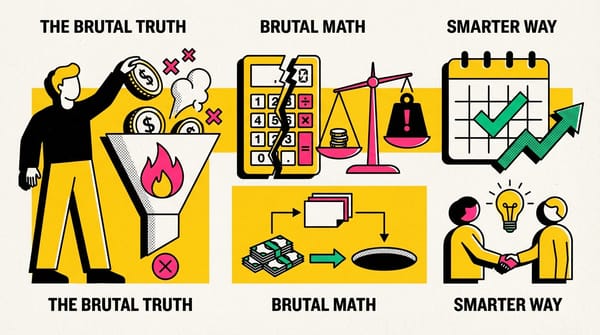
There's no formula. No hack. No five steps. The headline lied.
You can't outsource pain. You can't outsource burnout. You can't outsource yourself.
A blog is you. When you exist — it exists. When you don't — it doesn't.
And no formula will change that.
This post is written. The next one — who knows. But this one — I wrote.