The Critical Shift From Strategist to Project Manager
Strategy means nothing without execution—knowing when to stop planning and start managing the work is what separates ideas from results.

From Strategy to Action: When It's Time to Stop Planning and Start Doing
Once you've gathered your initial research, you should have clear answers to these questions:
- What are we offering?
- Who are we offering it to?
- What problems does this audience face?
- Which specific problem do we solve?
- What alternatives exist?
- What motivates people to use this product?
- What stops them from using it?
- What visual style fits best?
- What language describes this product?
- Which benefits matter most?
- Does demand already exist?
- Who competes with us directly?
- Who competes indirectly?
- What's the price?
- What does it cost us to deliver?
- Which channels will we need?
Now you can see your real costs and resource needs. More importantly, you can judge whether your goal makes any sense.
When Data Forces a Pivot
Sometimes research changes everything. Your original goal might need adjustment. That's fine—expected, even. Marketing strategy is joined at the hip with business strategy. They share the same data.
At this stage, you're a strategic thinker. Yes, you probably gathered all this information yourself. But your value isn't in collecting data. It's in stepping back, seeing the full picture, and pointing toward a direction that actually works.
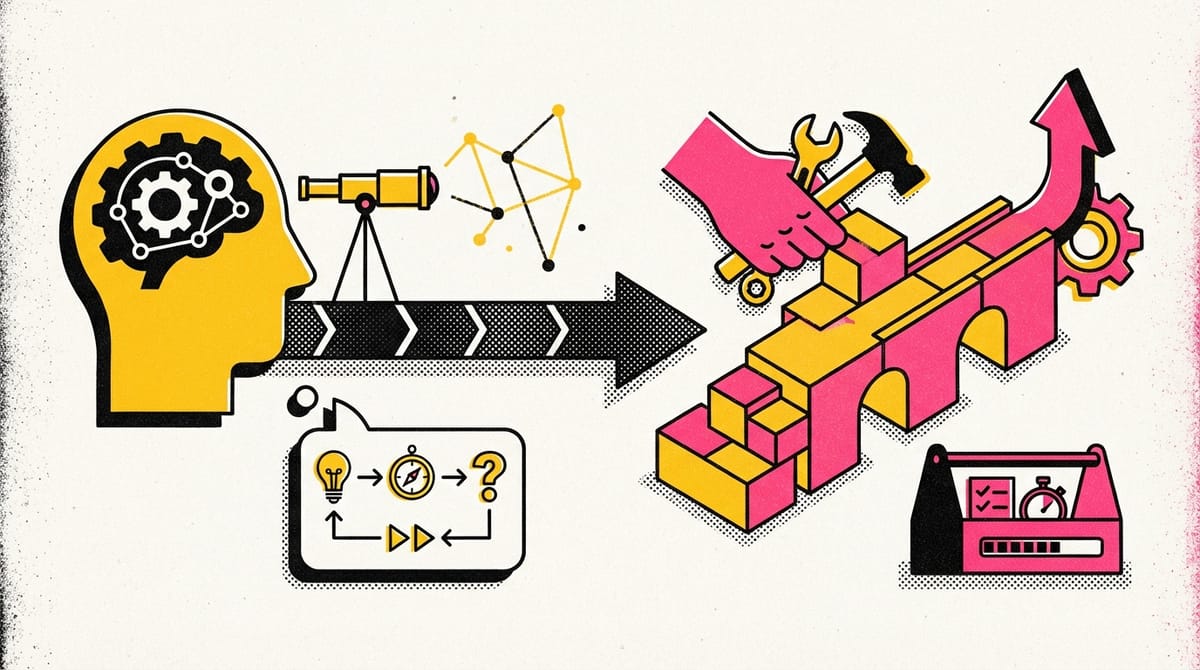
The Switch: From Strategist to Project Manager
Strategy without execution is a fancy document nobody reads. Once you've got a plan, someone has to make it happen.
This is where you shift into tactical mode. You become a project manager: assigning tasks, tracking deadlines, checking deliverables, handling the random fires that pop up along the way.
It's ordinary work. The grind. We'll cover that next.