What is Product Marketing
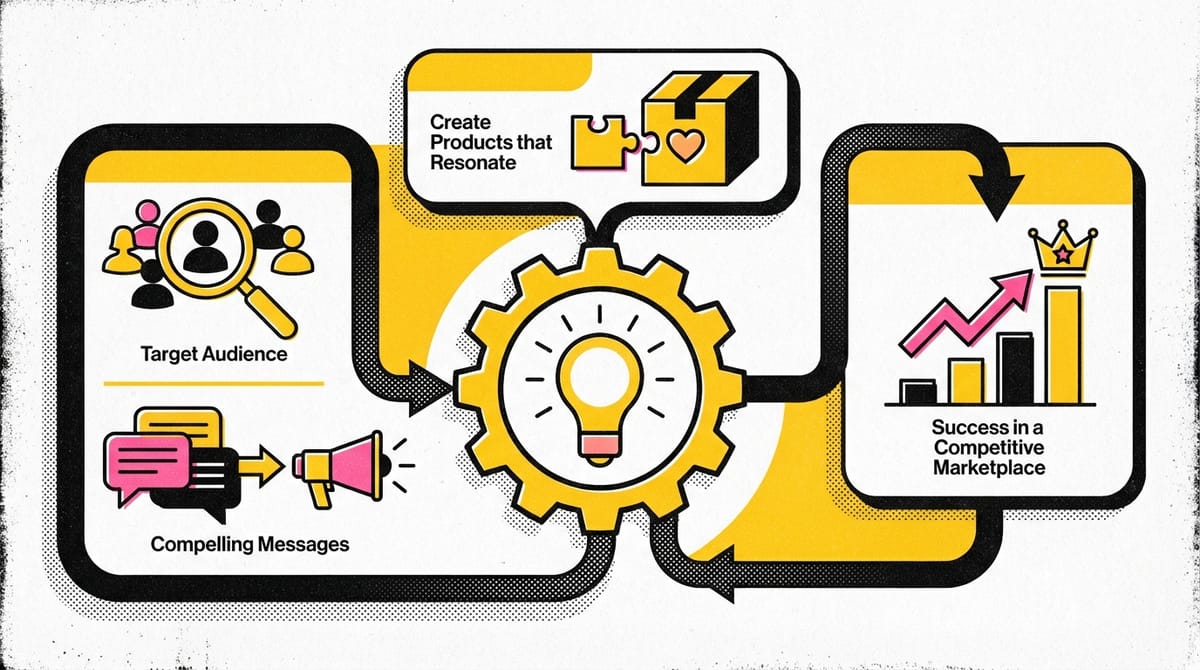
Discover the essence of product marketing through practical insights and real examples. Learn how to identify your target audience, craft compelling messages, and create products that resonate, ensuring success in a competitive marketplace.

What is Product Marketing
Marketing Zero to Hero
From Marketing Novice to Pro
Hi! I'm excited to present a series of educational articles about product marketing, written in simple and clear language. These materials are specifically created for those who want to understand the essence of marketing and its importance in modern business.
This will be especially useful for:
- Executives who want to gain a deeper understanding of marketing processes
- Small business owners looking to promote their products independently
- Creators who dream of effectively promoting their creations
- Anyone who wants to lift the veil of mystery from the world of marketing
What to expect:
- Detailed breakdown of key product marketing components
- Practical examples and real case studies
- Simple explanations of complex concepts
It's important to understand: this course won't make you a professional marketer overnight. Instead, I'll give you a reliable "treasure map" – a foundation of knowledge and tools that will help you navigate the world of marketing. But the "treasure hunting" – applying this knowledge in practice – that's your task.
Ready to embark on an exciting journey through the world of product marketing? Let's begin!
What is product marketing
Let's examine it using an orange as an example.
I have an orange, many oranges. Marketing doesn't consider an orange as a product until I offer to sell it to you. And since it's not a product, there can't be any marketing for it yet. But when the need to sell it appears, the fruit becomes a product — and that's when marketing comes into play.
The most obvious solution for selling oranges is to place an advertisement: oranges for sale.
This might even lead to a sale. But if I just advertise, I find myself in quite a foolish position — I don't know exactly what to advertise, where, to whom, and how. In other words, I don't know my target audience at all.
Target Audience
This is how we become marketers and start operating with terms like target audience. If you don't know what to do with your product, it's always good to start by determining who needs it and whose needs it can address — from physiological to psychological.
So, the first question we must answer is: who will we sell to? Who should we show our advertising to?
And here we have many options opening up before us. It could be young mothers, athletes, pastry chefs, restaurateurs, cafeterias, schools, children's camps, retail stores. You probably want to say: "Great, I want to sell to all of them, because I have lots of oranges, and 'digital oranges', any digital product, are actually infinite in quantity." That's great, and likely they all need oranges. But there's one problem: different target audiences need different approaches. If you sell to everyone the same way, almost no one will buy. Because you need to speak to your target audience in their language. If we say simply what marketing is — it's delivering the right advertising messages to the right target groups.
Therefore, if you have 100 marketers and lots of oranges, you can work on all fronts simultaneously. But if you're alone or you're coming to one of 100 marketers, the first thing they'll do is define the target audience. This is necessary to know who to deliver the advertising message to and what it should be.
Defining the Target Audience
Let's say we decide to work exclusively with athletes — simply because we're in New York, a city with many athletes and health enthusiasts, or because we're in Spain, where sports are everywhere. I understand athletes well, as I used to be one myself and still keep my finger on the pulse, maintaining an active lifestyle. What problems do athletes have? After training, they want to eat but need to avoid sweets — they need a healthy snack to avoid breaking their diet. They need more fruits in their diet. Intense workouts. Constant rush between work and sports. The need for vegetables, rice, protein, and so on.
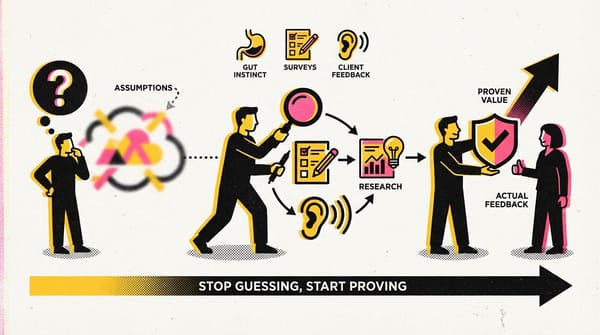
We know all this because we are athletes ourselves. But what if we don't know what problems our target audience has? Or what if we're mistaken about these problems? As a product manager, I can say: when we test hypotheses, we're always confident in them, but in reality, only 1-2 hypotheses out of 10 get confirmed.
Therefore, let's focus on our target audience's problems, because they hold the answer to what the advertising message should be that will guarantee us sales.
How do we learn about these problems? To avoid relying solely on our experience, which can be misleading, marketing offers various tools: conducting focus groups, quantitative surveys in target locations, studying specialized forums, ordering complete analytics from companies working with big data, and many others.
So, being athletes ourselves, we conducted surveys, studied forums, ordered analytics, gathered focus groups — and now we truly understand our customers' problems.
Red Bull
Let's look at how this works using Red Bull as an example. They don't just sell an energy drink - they sell a lifestyle. To whom? Extreme athletes, students, office workers who need an energy boost. Red Bull doesn't try to please everyone. Instead, they create content and events that attract their specific audience. For example, they sponsor extreme sports, organize air races. This isn't just advertising - it's creating an entire culture around the brand. And you know what? It works. People aren't just buying a drink, they're buying the feeling that they're also part of this cool, extreme world.
Product
We ask the question: what should the product be like to most effectively solve our customer's problems?
An orange can be sold individually or in packages of several pieces. It can be offered fresh, in the form of juice, puree, electrolyte gel, or already peeled. We can make preserves, sugar-free jam, or thick jelly. How do we determine the best option?
When we develop our orange product, we don't just think "Hey, let's make juice!" No, we start with our athletes. What do they need? Maybe they don't just need an orange, but an orange gel that's convenient to take on a run? Or maybe orange segments in convenient packaging for a post-workout snack? We make hypotheses, create prototypes, and let our athletes try them. What do they like? What don't they like? We listen, learn, and improve. And only when we're sure that our product truly solves our customers' problems do we launch it on the market.
If such products already exist in the market, we can buy analytics about them, talk directly with other orange sellers, or conduct our own research — both in retail stores and online.
But if we're creating something new, there are no universal rules. Here marketing intersects with product management: both marketers and product managers make hypotheses and test them.
Essentially, a marketer's job is to think, make hypotheses, test them, and implement successful ones. The main rule of a good marketer and product manager is to assume you know nothing and test all hypotheses before spending budget.
In familiar areas, experienced marketers really know what to do, and usually this brings profit. But! There's always room to do more, be more precise, and do better. It's important to stay open to new things, propose and test fresh hypotheses, become innovators. A good experienced marketer always combines two approaches: following the proven path and testing new hypotheses to adjust their course.
So, we've come up with hypotheses, tested them, and got a product — or even more than one.
Advertising Message
Now we need to start telling people about our product.
What will we tell them? That it's a fruit, it's healthy, not just sweet but contains fiber? A vitamin boost, sweet or healthy? Or maybe both? Or is it "5 in 1" — jelly-collagen, fiber, sweetness, electrolytes, and vitamins? Or should we talk about everything at once?
It's very important to formulate the right advertising message for a specific target audience whose pain points and needs we know. Certainly, marketing has its dark side — manipulation and so-called "pushing." This means creating artificial value for an audience that doesn't need our product. Don't do that. Marketing and sales are about helping people address their pain points and needs through our product. So once again:
The right advertising message to the right people
Imagine we've created the perfect orange gel for athletes. Now we need to tell the world about it. But how? We can't just say "Hey, we have an orange gel!" No, we need to speak our athletes' language. Maybe our message should sound like: "Natural energy boost for your best performance." Or "Recover faster with the power of sun-ripened fruit." We're not just advertising a product, we're telling a story about how our gel will help athletes achieve their goals. And this story needs to resonate with their experience, their aspirations, their problems. Only then will our message truly reach its target.
Production
Depending on what we've decided and planned above, we order design (creatives) for targeting, shoot TV commercials, create videos for social media, organize collaborations with bloggers.
In general, the main thing is where our target audience is and whether our chosen method can deliver our advertising message to them. I'm heavily hinting that advertising on television or with million-follower bloggers can be either a bad or a good solution.
Okay, we know who we're selling our orange gel to and what we want to say. Now the question is - where and how? Maybe our athletes spend a lot of time on Instagram, scrolling through their feed after training? Then we need to be there with bright, attractive posts. Or maybe they listen to fitness podcasts while running? Then let's consider podcast advertising. Or maybe they frequently attend sporting events? Then we should think about sponsoring these events. Remember, there's no universal solution. It's important to find the channels where our target audience spends time and speak to them where they'll hear us.
Imagine we decided to market our oranges to athletes as the perfect post-workout snack. We could organize events at gyms where people can try our oranges after their workout. Or create a series of videos with well-known athletes talking about how our oranges help them recover after intense training sessions. We're not just selling fruit - we're selling the idea of a healthy lifestyle and quick recovery. And like Red Bull, we're creating a community around our product.
Once again: only one thing matters - whether our chosen method can deliver the right advertising message to the right people. And if yes - then let's move forward, measuring metrics (more details in upcoming articles).
Economics
Let's say Facebook and Instagram offer to run our ads for $100. After launch, we get 1000 visitors, of which 100 make a purchase. This means one customer costs us $1. The question arises: can we afford to pay $1 to acquire one customer? Does this fit into our economics? Let's calculate.
Let's assume the product cost is $5. We sell it for $10. In our Facebook and Instagram advertising campaign, we spend $1 to acquire one customer. Under these conditions, we make $4 profit from each sale. However, after deducting taxes, shipping, employee salaries, and overhead costs, our profit significantly decreases.
In this situation, we have several options: raise the product price, find cheaper ingredients, optimize packaging size, look for more effective advertising platforms, or work on increasing the average order value by offering customers multi-product bundles. This will help extend the customer lifecycle.
In this case, the economics can work out. When we talk about selling multiple packages, we approach an important topic - customer retention. Retention happens when customers return for repeat purchases. The second time, we don't spend money on acquisition - they come back on their own. Even with an initial acquisition cost of $1, if the customer continues to buy our products for a long time, we can make a profit.
For example, if a customer makes purchases worth $50, and we only spent $1 to acquire them, the probability of turning a profit is very high. This is the main goal of customer retention.
Retaining a customer is always cheaper than acquiring a new one. This means not only investing in loyalty programs but also ensuring excellent service overall.
Many companies make a common mistake: they spend large budgets on acquiring new customers while forgetting to take care of existing ones, and consequently lose them. While acquiring new customers is important, working with existing customers is a priority. However, if you're a freelancer or individual entrepreneur, you can focus on working with regular customers without attracting new ones - especially if you don't plan to scale the business.
Imagine our athlete bought our orange gel. Great! But how do we make them come back for more? Here are some ideas:
- Loyalty program: For each purchase, the athlete earns points. Collect enough - get a free gel or maybe a cool sports bottle with our logo.
- Personalized offers: If we know our customer is preparing for a marathon, why not offer them a special set of gels for race preparation?
- Useful content: Let's create a blog or YouTube channel with advice on training, nutrition, recovery. Our gel will be part of these tips, but not obtrusively. We're not selling, we're helping.
- Community: Let's create a social media group where our customers can communicate, share experiences, support each other. And of course, discuss how our gel helps them in their training.
Remember, retaining a customer is always cheaper than acquiring a new one. So let's make sure our athletes don't just buy our gel, but become part of our "orange" community.
Analytics and Return to Start
Okay, we've launched our orange gel campaign. We've gone through the entire product marketing journey for one product. Now it's time to see what works and what doesn't. It's like after training - you need to evaluate the results. How many people saw our ad? How many clicked? And how many bought? These numbers are our new best friends. They'll tell us if our advertising attracts attention, if people are interested in our product, and most importantly - if it's making us money. If something's not working, we change it. Maybe try a different image in the ad? Or change the text? Or perhaps we should show ads at a different time? Analytics is like a compass in the marketing world. It helps us understand where we're going and if we need to change course.
Let's say we decided we need two products in our line. It turned out that no one is buying the first product, and we don't understand why. Meanwhile, our athletes loved the second product. What to do? We'll work on the unsuccessful product. For example, change the packaging to make it more convenient for people to use. We'll make a compact flexible plastic package, like baby food pouches.
After updating the packaging, we launch the whole process again: set up communications, organize customer acquisition, recalculate economics, and think through retention strategy.
Trends and Meanings
You know, the marketing world changes as fast as our athletes' sneaker trends. Yesterday everyone was talking about banner ads, today it's TikTok videos, and tomorrow? Maybe we'll be selling our orange gel in virtual reality? Or using artificial intelligence to predict when our athlete will need their next gel portion? Or maybe our gel will order itself when it runs out, through a smart fridge? Sounds fantastic, but here's what's important to remember: no matter how cool the technology is, a person always remains at the center. Our athlete who needs a tasty and beneficial gel. So while trying new trends, let's not forget about the main thing - our customer's needs.
Product Marketing
Marketing is an endless cycle of forming hypotheses, testing them, implementing successful ideas, attracting and retaining customers, analytics, and then it all repeats again.
If you work alone, you perform all roles yourself. If not - most of the work is done by a team from different departments. You manage them strategically, while operationally - the employees themselves or their managers handle it. You are at the center of this process.
Marketing is a process through which we create a product that a specific group of people needs. It solves their problems exactly as they need, and they know about its existence.
They have the ability to order the product on the website or buy it in a store. The product has an acceptable price for customers while bringing us, the manufacturers, profit. Most importantly - people like the product so much that they come back and buy it again and again.
This is what product marketing is all about. Ideally, it can be scaled: by investing 10 times more in advertising, we'll get 10 times more profit. But we'll talk about scaling another time. We've covered the general principles of product marketing, in the next article we'll move on to specific details.
Practical Tips
Here are some warm-up tips:
- Start small. Don't try to conquer the whole world at once. Choose one platform, one channel, and master it completely.
- Talk to your customers. Constantly. Ask what they like and what they don't. It's like tuning a race car - constant small adjustments lead to big wins.
- Test, test, and test again. Tried something new? Great! Now look at the numbers. Working? Do more of it. Not working? Try something else.
- Be consistent. Marketing is a marathon, not a sprint. Don't expect instant results. Keep working, even when it seems like nothing is happening.
- Learn from competitors. Look at what other brands in your niche are doing. But don't blindly copy - take their ideas and make them your own, better.
Remember, there's no magic pill in marketing. It's a constant process of trial and error. But if you're persistent and attentive to your customers, you'll definitely find your path to success. Good luck on your marketing journey!