When a Great Product Gets Killed by Terrible Service
A flawless deliverable means nothing if your client spent weeks anxious, ignored, and chasing you for updates. They're not just paying for results—they're paying for peace of mind.

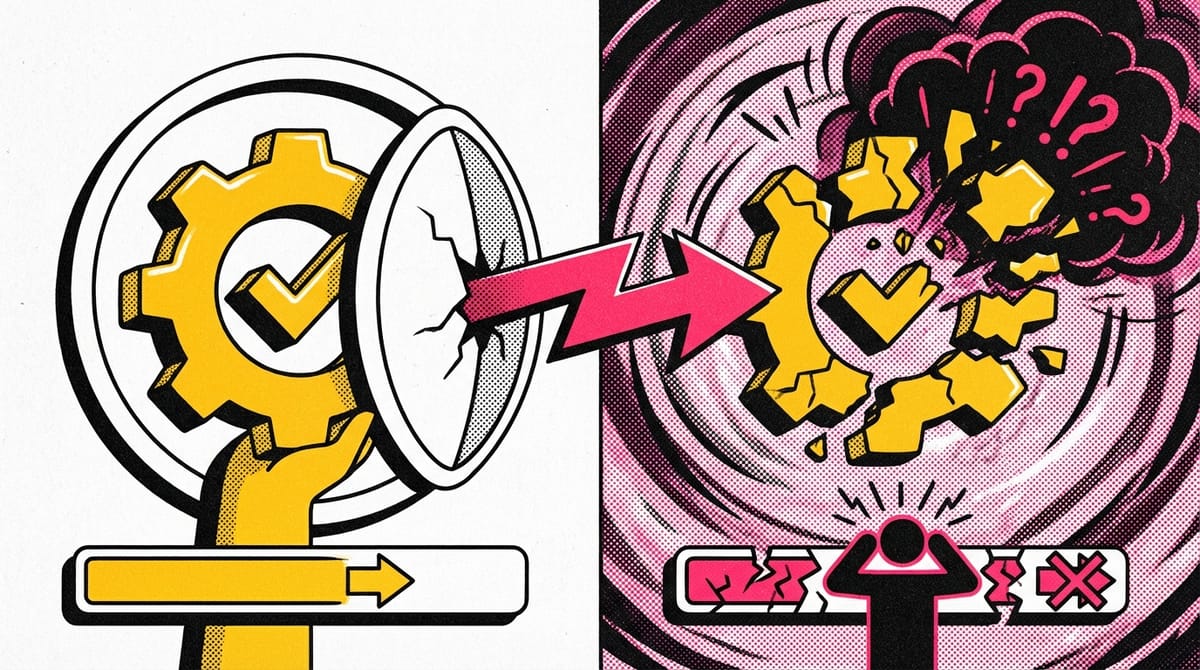
It's easy to believe that quality of work is all that matters. "I'll deliver an amazing copy / agent / automation — and the client will put up with everything else." But customer experience doesn't work that way.
Poor service can:
- completely overshadow an excellent deliverable;
- rob the client of any sense of joy or relief;
- leave them remembering not your great work, but the anxiety, frustration, and feeling of being disrespected.
We've all been there:
- you visit a restaurant with incredible food, but the staff treats you like an inconvenience — and you leave thinking not "that was delicious" but "what jerks";
- you buy electronics from a discount store, save some money, but the salespeople are rude, rush you through, won't let you properly check the product — and you regret not paying more for decent service;
- you hire a contractor who does solid work but constantly ghosts, ignores messages, and keeps you in limbo.
In all these cases, you're paying not just with money, but with your nervous system. And next time, you won't choose "slightly better quality" — you'll choose whoever gives you peace of mind.
People pay for reduced anxiety and predictability
Clients don't come to creators out of idle curiosity. Usually there's real stakes — money, reputation, deadlines, an important event, a launch.
And that always comes bundled with:
- uncertainty — will this even turn out the way we need it to;
- fear of being scammed or abandoned;
- anxiety: will we make the deadline, will this tank our event, will we let our team down.
Great customer service means you're selling not just the outcome, but also:
- clarity — the client knows what's happening with the project right now, what stage it's at, what comes next;
- transparency — you have a plan, timelines, agreements, payment terms. No "gray area" vibes;
- predictability — if something goes sideways, you flag it early and come with a new plan;
- human connection — the client feels like they're being talked to as an adult, not brushed off with canned responses.
People will pay significantly more for this. Not for "one more percentage point of quality," but to stop living in constant project anxiety.
What customer service actually consists of
Customer service isn't about "being nice in chat." It's a set of specific actions and decisions you make throughout a project.
1. Presenting your work
The typical freelancer does this: finishes the mockup / copy / edit → drops a link → "let me know your feedback."
At that moment:
- the client is busy with other things and barely glances at the work;
- they've already forgotten the original brief and success criteria;
- if they're short on time, they forward the link "for comments" to their team, partner, or random uncle.
Result — a chaotic flood of feedback, contradictory comments, frustration on both sides.
A proper presentation looks different:
- You schedule a call or meeting — a moment when the client is actually focused on you.
- You briefly recap the brief and constraints you worked within: why this project exists, who it's for, what the parameters were.
- You walk the client through the work step by step, explaining the logic behind your decisions.
- You discuss what's landing, what raises questions, what the next steps are.
After a presentation like this:
- revisions drop by several times;
- feedback is more thoughtful;
- the client understands what they paid for.