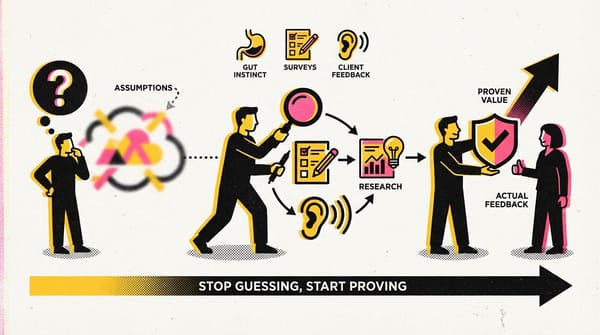
Why Ignoring the Problem Costs More Than You Think
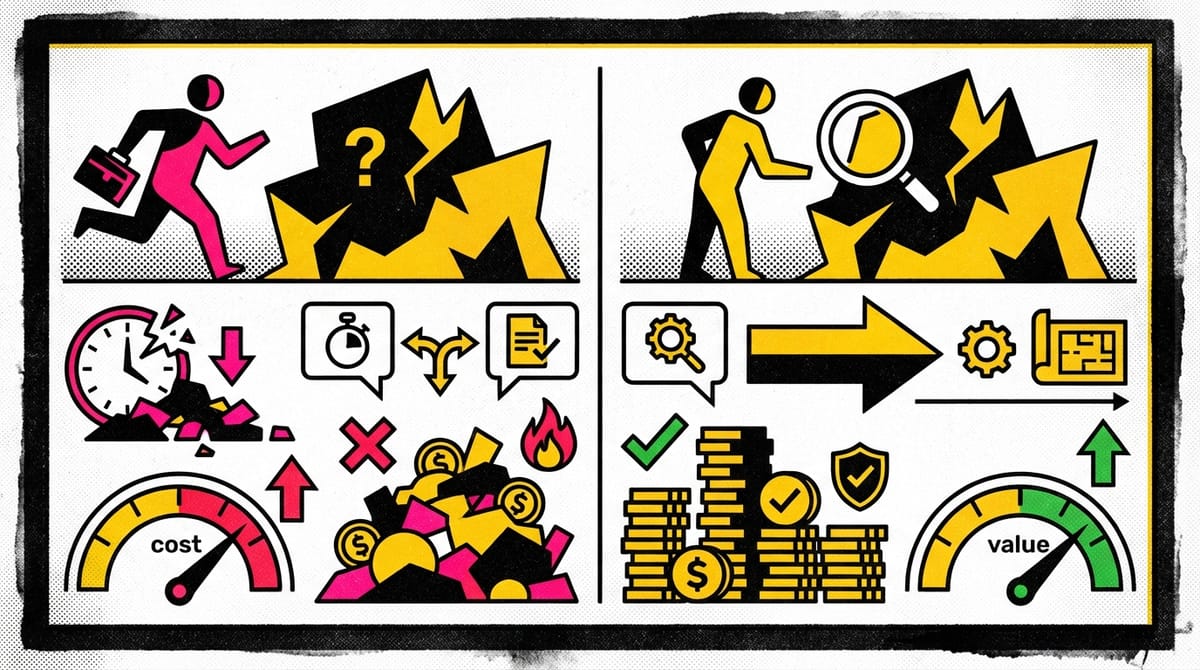
Skipping problem definition doesn't save time—it wastes budget. When marketing pushes convenience while sales talks compliance, everyone loses.

Why Marketers Jump to Solutions Before Understanding the Problem
Here's how it usually goes. The brief lands: sell point-of-sale systems. The marketer's brain immediately starts generating tactics. Let's push it through CRM integration! Create educational content! Run ads about how cutting-edge it is!
Hold on. What problem are we solving? For whom? Why would anyone care about our POS systems in the first place?
This happens to everyone. Your brain finds it easier to generate solutions than to sit with ambiguity. But without understanding the actual problem, every tactic becomes a shot in the dark.
What Happens When You Skip Problem Definition
Picture this: you launch an ad campaign highlighting how sophisticated your solution is. Budget spent, clicks rolling in, zero sales. Why? Because the store owner doesn't care about sophistication. She cares about the $1,000 fine for operating without proper equipment. Or the $500 disappearing every month because staff is skimming.
Without a clear problem statement, everyone pulls in different directions. Marketing pushes convenience. Sales talks about time savings. Leadership insists compliance is the angle. Three messages, none landing.
Predictable outcome: money burns, conversions flatline, everyone blames everyone else.
How to Frame a Problem Correctly
A useful problem statement has three parts:
- Who has this problem (specific audience)
- What the problem actually is (measurable terms)
- What success looks like (clear criteria)
Back to POS systems. Here are two different framings:
Framing 1: Retail owners lose up to $5,000 monthly because they can't track actual sales. They need a system that shows real revenue and cuts theft-related losses by at least 70%.
Framing 2: Store owners face fines up to $1,000 for non-compliance with POS requirements. They need something they can install in 3 days without hiring a tech consultant.
These aren't variations of the same problem. They're completely different problems requiring completely different approaches.
From Problem to Strategy: Two Paths
Strategy for Problem One (Revenue Leakage)
If the problem is losing money to poor visibility, your strategy centers on control and efficiency:
- Find business owners who've already caught employees stealing
- Show how POS plus inventory tracking creates an airtight system
- Lead with case studies: "Cut shrinkage from $5,000 to $1,500/month"
- Use surveys to identify people actively worried about this
- Build lookalike audiences from customers who converted on this message
Strategy for Problem Two (Compliance Fear)
If the problem is avoiding penalties, everything changes:
- Track regulatory rollout timelines by industry
- Launch campaigns one month before each compliance deadline
- Core message: "Set up in 3 days, avoid the fine"
- Reduce the purchase flow to a single button
- Emphasize speed, not features
Notice how the tactics emerge naturally once the problem is clear. You don't need creative brainstorms—just give people what solves their actual pain.
How to Stop Sliding Back Into Solution Mode
Staying with the problem is hard. Your brain keeps wanting to jump to answers. This checklist helps you stay honest:
- Get alignment first. Marketing, sales, leadership—everyone needs to agree on the problem before anyone proposes solutions. One meeting. Written statement. No ambiguity.
- Demand numbers. If you can't quantify the problem, you don't understand it yet. Keep digging.
- Define what "solved" looks like. What specific metric moves? By how much? In what timeframe?
- Test it with actual customers. Ask directly: "Is this your biggest headache?" If they go quiet or change the subject—wrong problem.
What to Do Right Now
Pick any marketing project currently on your plate. Before brainstorming tactics or channels, answer these three questions:
- Who exactly has this problem? (Not "small businesses"—"independent coffee shop owners doing $20K-50K monthly revenue")
- How does the problem show up in their daily work? (Not "inefficiency"—"spending 4 hours weekly reconciling receipts by hand")
- What changes when it's solved? (Not "things improve"—"reconciliation takes 15 minutes, discrepancies drop below 1%")
A well-framed problem is half the solution. Once you understand what actually hurts, the tactics become obvious. More importantly, you stop burning budget on guesswork.