Why Understanding Market Forces Is Critical for Success in 2026
Market forces will make or break your product—regulations can sell it for you or kill it before launch, and your real competitors often never show up in analysis docs.

Regulations and Trends: What Actually Matters in Market Analysis
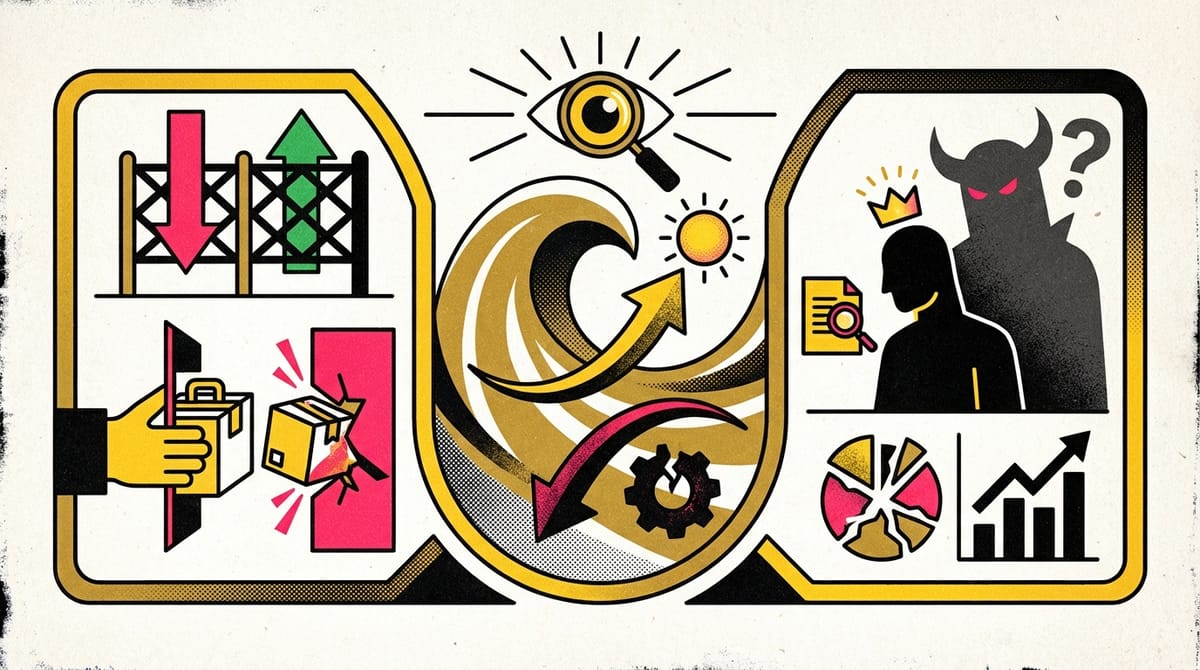
Regulations can sell your product for you — or kill it before launch.
Point-of-sale compliance laws forced businesses to buy new equipment. That's a tailwind. Meanwhile, online pharmacy sales were banned until recently. That's a wall. Know which you're facing.
Trends Signal Where the Market's Heading
By 2026, e-commerce will lean heavily on AI personalization, mini-apps, and social commerce. Sustainability won't be optional. Getting discovered through major platforms will get harder, not easier. The point-of-sale industry saw this pattern early. Alcohol tracking systems came first. Then luxury goods. Then apparel. If you were building POS software, you had to build for compliance integration — or watch clients leave when the next mandate hit. That's how features like inventory dashboards became essential, not nice-to-have.
Technology Matters Less Than How It Changes Behavior
Nobody cares if a receipt hits their inbox in 0.25 seconds or 25 seconds. That's a 100x difference that changes nothing. But one-click setup? That would've changed everything. The real friction wasn't speed — it was implementation complexity scaring off buyers who didn't want another IT project.
Your Real Competitors Aren't Who You Think
If you're selling chocolate bars, your direct competitors are other chocolate bars. Your indirect competitors are dried fruit and bananas — they deliver the same quick sugar hit. POS companies obsessed over Square and Clover. Meanwhile, aggregators offered workarounds that avoided registers entirely. Rental services undercut ownership. "We'll handle compliance for you" consultants siphoned off the overwhelmed. None of these showed up in competitive analysis docs. All of them took market share.
Total Market ≠ Your Market
Everyone who accepts consumer payments needs a register. But project-based enterprise deals and retail box sales require completely different operations, margins, and teams. Your actual addressable market depends on your capacity, your relationships, and what you've built.
Segment Your Audience or Miss Everyone
John runs a corner grocery with one cashier. He picks the register himself after watching a YouTube review. A three-store chain? The owner delegates to a bookkeeper or operations manager. The decision-maker shifts. You can target chain directors all day. If the actual buyer is a regional manager who never sees your ads, you've burned your budget talking to the wrong people.
Features Must Solve Actual Problems
John sells bulk goods by weight — your system needs scale integration. He hand-labels cookies with Sharpie prices — you need open-amount line items. His basement store has no cell signal — you need ethernet support. His cashiers quit every three months — you need role-based permissions to prevent theft. Each of these is a deal-breaker for someone. Miss one, lose the sale.
Map What's Stopping Adoption
For POS systems, regulation was the driver — the law said "buy this or get fined." The barriers? Owners didn't want to spend money. They'd built workarounds over years. They didn't know how to use modern systems. And some really didn't want tax authorities seeing their actual revenue. Drivers push adoption. Barriers slow it. You need to amplify one and dismantle the other.
---
This analysis shapes both product requirements and go-to-market moves. Works for new products. Works for existing ones that stopped growing.