Why Your Content Isn't Selling: The $50,000 Lesson

Why your content isn't selling
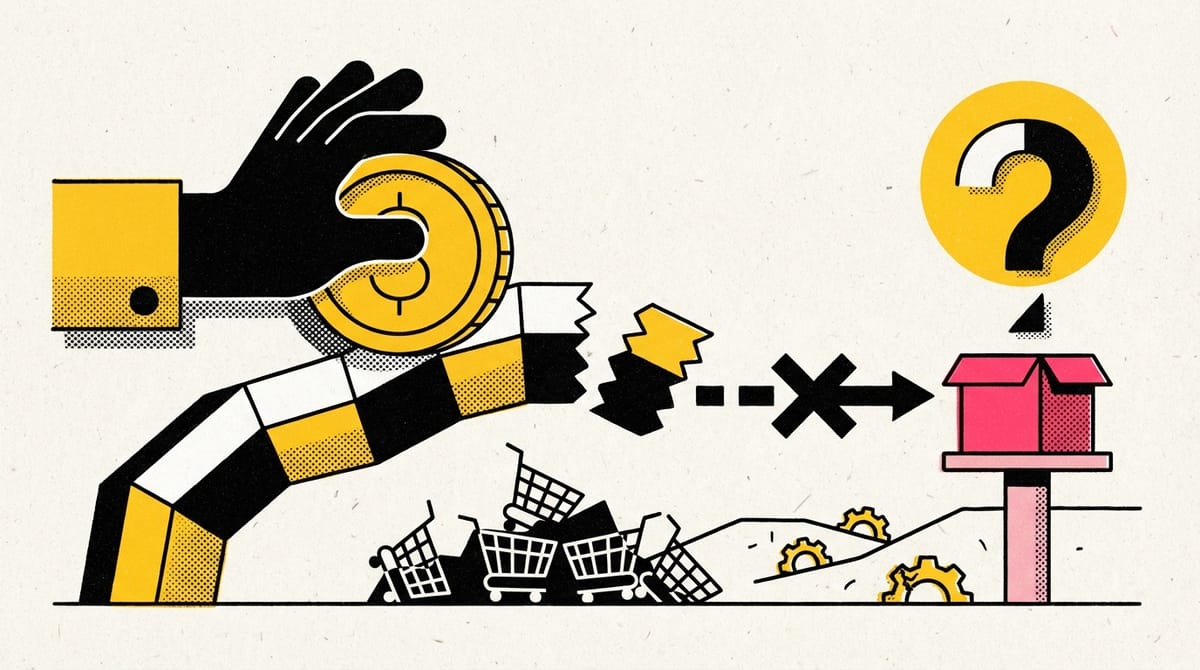
I spent years creating content that got compliments but never clients. People would tell me my posts were "so helpful" — and then hire someone else. The problem wasn't my expertise. It was that I'd never actually thought about what selling through content means. Here's what changed everything for me: treating my blog like a business asset, not a creative outlet.
What selling through content really is
Let's clear something up first. Selling isn't manipulation. It isn't "convincing" people to buy things they don't need. Selling is an exchange. You have something valuable — knowledge, a framework, a service. Someone else has a problem that thing solves. Money changes hands. Both sides win. When I stopped thinking of sales as something I do to people and started seeing it as something I do for people, everything shifted. My content got more direct. My offers got clearer. And weirdly, I felt less sleazy — not more.
The three questions behind every sale
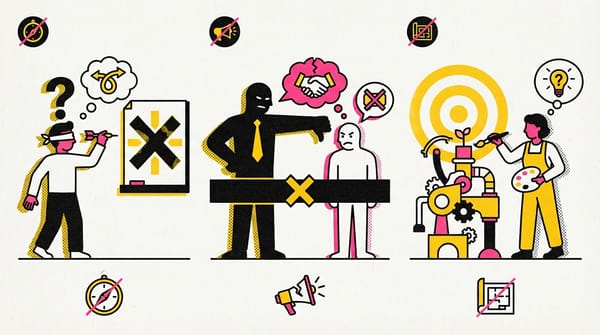
Every sale — whether it's a $47 ebook or a $50,000 consulting engagement — comes down to three questions: 1. What are you selling? 2. Who are you selling it to? 3. How do they find out about it? Product. Audience. Channel. That's it. When content doesn't convert, the problem lives in one of these three buckets. Usually it's that you've never clearly answered the questions in the first place.
Example: three ways to get across town
Think about how you choose between options when you're solving a problem. Say you need to get across town for a meeting. You could take an Uber — comfortable, door-to-door, but expensive and unpredictable with traffic. You could take the subway — cheaper, faster, but crowded and you'll walk a few blocks. You could walk — free, but you'll arrive sweaty and late. Same destination. Three completely different value propositions.
How companies position the same outcome
Here's what's interesting: the companies behind these options don't wait for you to figure out why they're better. Uber's marketing emphasizes comfort and convenience. The transit authority promotes speed and reliability. And the fitness apps frame walking as a health benefit, not a compromise. They're all competing for the same trip — but positioning their solution differently based on what certain people value. Your content works the same way. You're competing with other solutions to your reader's problem. Your job is to help them understand why your approach fits their situation.
Who you're actually selling to
This brings us to the second question: who are you actually selling to? I personally take Ubers or the subway. I have zero interest in car-sharing services or buying a vehicle — I live in a city where parking costs more than rent. But my parents? They're in the suburbs. A car isn't a luxury for them; it's a necessity. Same product category. Completely different audiences. When I see car ads, they bounce off me. I'm not the target. But that doesn't make the ads bad — it means they weren't built for me.
When the reader isn't the buyer
Here's where it gets subtle: sometimes the person consuming your content isn't the person who pays. Think about SAT prep courses. The students take the course, but parents write the check. Test prep companies know this. Their marketing speaks to two audiences simultaneously — promising results to kids and peace of mind to parents. On my newsletter, I've noticed something similar. Sometimes my most engaged readers aren't my buyers — they're the people who recommend me to buyers. Understanding this changed how I think about who I'm really writing for.
Narrowing your true audience
Your audience isn't "everyone who might be interested." It's the specific people whose problem you solve, who can afford your solution, and who are actively looking for it. When I narrowed my focus from "people who want to grow their business" to "consultants and course creators selling through content," everything got easier. My topics became more specific. My examples landed better. And the right people started finding me.
When people don't know your category exists
Sometimes people don't even know your category exists. Last summer I was walking through downtown and noticed people zipping around on those rental electric scooters. Never thought about using one. Wasn't looking for it. But later that day, I saw an ad in an app I was already using — "Skip the walk. Scooters nearby." That's how I learned about a new option I didn't know I wanted. Your blog does the same thing. Some readers arrive with a problem and find your solution. Others arrive for entertainment or education — and discover they have a problem they didn't know had a name.
Choosing and owning your main channel
The third element is your channel — how people actually find you. The options are endless: paid ads, affiliate partnerships, speaking gigs, podcast guesting, SEO, social media, word of mouth. But here's what I've learned: mastering one channel beats dabbling in six. My channel is my newsletter, distributed through a personal blog. Everything feeds into it. Social posts, guest articles, podcast appearances — they're all just roads that lead back to the email list. Because the email list is the only channel I actually own.
The framework to turn content into sales
So here's the framework. For anything you're selling — coaching, courses, consulting, products — answer these three questions with brutal specificity: What am I selling? Not "consulting" — what transformation, what outcome, what specific problem solved? Who am I selling it to? Not "business owners" — which ones, at what stage, with what specific pain? How will they find out about it? Not "social media" — which platform, what content type, what call to action? Every piece of content you create should connect to these answers. When it does, your blog stops being a hobby and starts being a sales engine.